
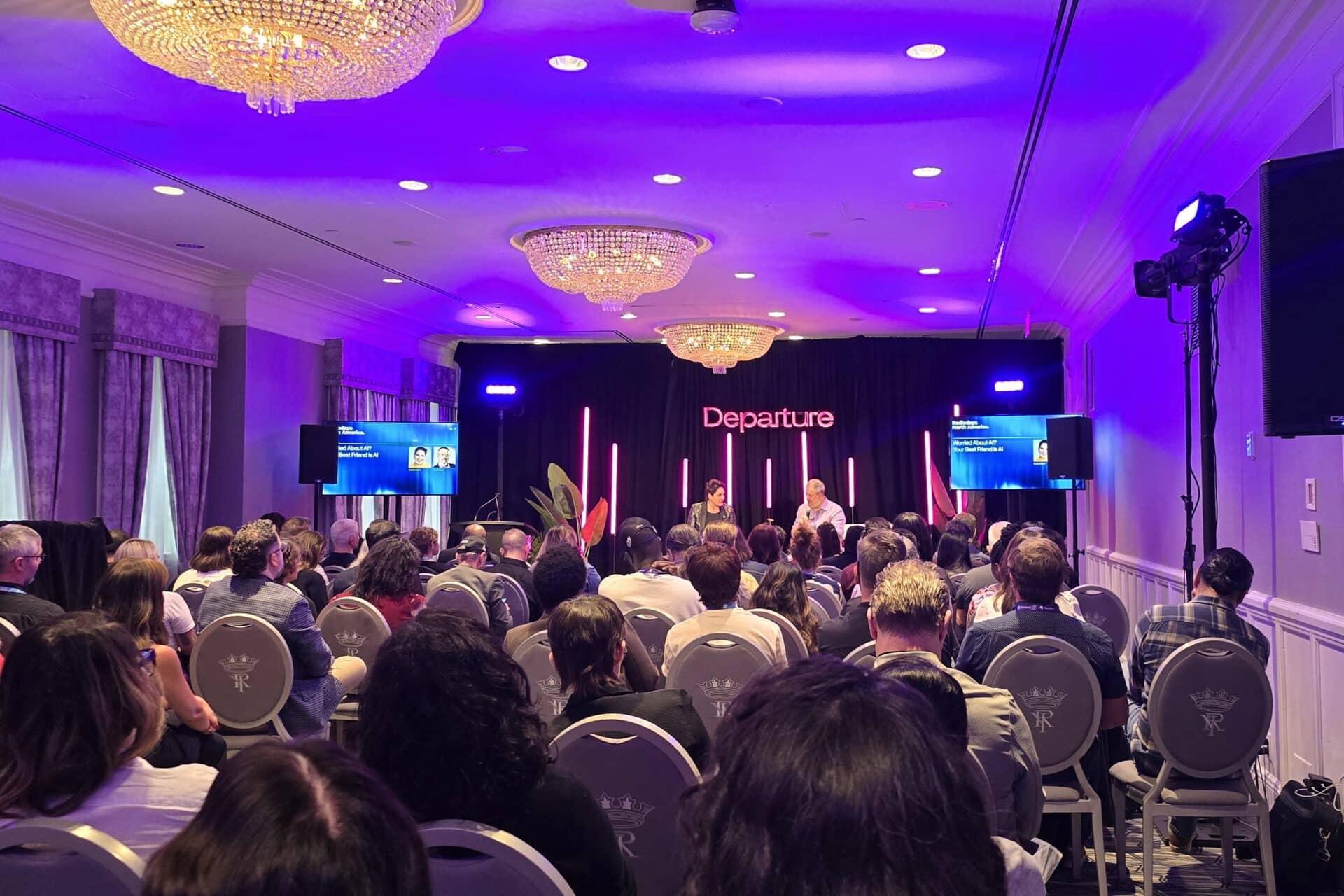
This year I attended Radio Days North America, a premier conference for radio, podcasting, and digital audio professionals at Departure Fest. I was drawn to the conversations and sessions focused on Canada’s music industry, radio broadcast, and cultural policy. A recurring question kept popping up: Who is Canadian radio actually being built for, and who gets to decide what reaches the airwaves?
This was not asked in a cynical way exactly, but in a more naive sense that I was happy to challenge, listening to the panelists and meeting other reps from commercial and non-profit radio stations across North America.
Do they care about indie music, about Canadian labels, about getting upcoming songs and artists heard on national airwaves? Or are we all just speaking different versions of the same language and hoping something translates? Maybe this is the final boss of gatekeeping.
Each session seemed to be full of metaphors to get points across. Benefits and criticisms were levelled towards each motion for policy change. At one point, a reference to the Canadian satirical comedy, Letterkenny and its fictional goth band, The Skids, was used as a reference point. Half joke, half shorthand for how Canadian identity in the entertainment industry often gets flattened into something legible, even when it’s meant to be influenced by local themes, specific to a certain region or group.
And yet, underneath the humour, there was seriousness. Yes, I do think people care. But then the bigger question becomes: why all this talk about policy on radio now?
“That part isn’t really my world,” one person in artist management said to me. I told him that I was sure it wasn’t before this conference. I, for one, am glad to have had the opportunity to get a broader picture of a still very prevalent part of the Canadian media industry, which I find myself a small part and active consumer of.
What became clear is that radio is restless. Everyone seems to want to help each other, to fix something, to build something better. So why does it still feel like a broken telephone, where intention doesn’t quite make it to implementation?
There was also an undercurrent of frustration around commercial radio. Are some stations getting lazy, leaning too heavily on familiar formulas? The example of morning mixes came up and how much of what we hear is actually shaped by US-centric programming decisions, even here in Canada.
That led into a broader question: if we’re serious about CanCon (Canadian Content) regulations and airplay, why stop at just meeting requirements? Why not expand the imagination of what Canadian music programming can actually sound like? As one panelist pointed out, where resources go, talent grows. The rest is often just waiting for infrastructure to catch up. However, this may be my naivety coming around again.
Alex Freedman, representing the Community Radio Fund of Canada offered something grounding in response. If the industry wants to test Canadian music on real audiences, look no further than campus and community radio. Stations like Met Radio 1280 AM, which actively prioritize CanCon and emerging artists, already function and succeed at providing space for new ideas and fostering talent.
Overall, this conference revealed an industry searching for alignment.
Listening to these discussions, I found myself returning to the same question I arrived with. Not whether people care—because by the end of the conference, I was convinced that many of them do. Regulators, broadcasters, station managers, funders, and artists all seemed invested in the future of Canadian music on Canadian Radio. Maybe now, the challenge lies in how that care is translated into action.
(Photo by Barry Rooke)
Author: