
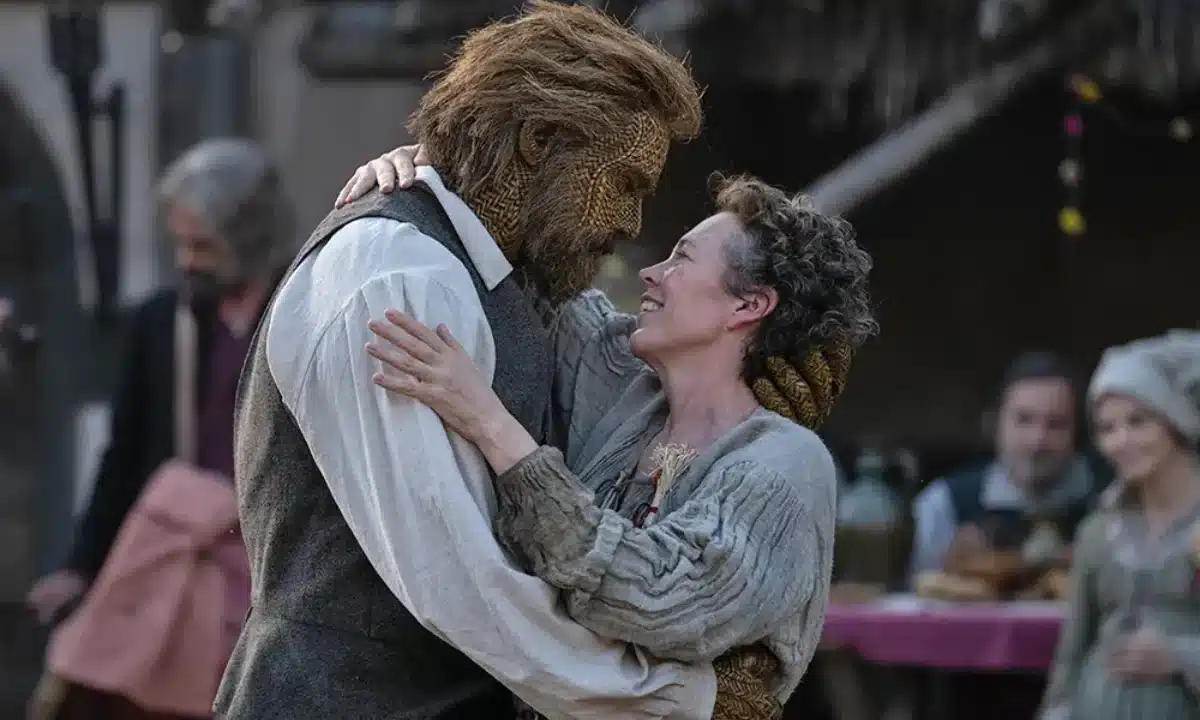
Who would’ve thought a piece of wood would be the one to give us the 411 on the anti-toxic masculinity movement?
Alex Huton Fischer and Eleanor Wilson’s 2026 fantasy-comedy Wicker made its debut in North American theatres earlier this month. Starring leading actresses Olivia Colman and Alexander Skarsgård, Wicker brings in a diverse crowd for an unexpectedly insightful take on gender roles and female sexuality.
Contrary to its socio-cultural depth, I walked into Wicker expecting nothing more than a crude but lighthearted comedy, especially in respect to its rather “raunchy” and “provocative” advertising. I must admit, on first glance, I’d categorized Wicker as a girls-night-out watch that would eventually make for some iconic but totally inappropriate inside jokes. Although I left the theatres feeling empowered to exercise my own right to volition and pleasure.
Wilson & Fisher’s cinematic adaptation, Wicker, follows a fisherwoman (Olivia Colman) as she combats social exclusion as one of the few unwed women in her village. Until, the town’s dodgy, but pure-hearted basket weaver (Peter Dinklage) offers her an unconventional alternative: a husband made out of wood. As the relationship between the fisherwoman and her wicker husband (Alexander Skarsgård) proves to be something of substance, the once-sanctimonious villagers become increasingly transfixed by their bliss, offsetting a chain of adversities against the unsuspecting newly weds.
Although Wicker pushes back at some very real social issues and attitudes, it manages to maintain an airy nature with its integration of off-beat humor. Whether it’s a heated standoff between the fisherwoman and the villagers, or the wicker husband attempting to weigh in on the politics of sexless marriages, the scriptwriters managed to strike gold in creating tension breaks that actually elevate a scene. In fact, it’s the wicker husband’s dry sense of humor that makes him such an iconic character. By responding to spews of misogyny with deadpan wit, the wicker husband practically makes a joke out of toxic masculinity and all its remnants. Humor is not only used to accentuate dialogue, but communicate a grander message about the illogical foundations of systems of oppression, like misogyny.
Aside from humour, Wicker also manages to successfully capture the essence of silent suffering with its wide shot cinematography. Even before identifying a causal factor, Wicker’s cinematography capitalizes on using scene traffic to highlight an oddity. In cinematically decentering a character at their utmost vulnerable state, the film manages to communicate a grander message about the emotional complexity of loneliness itself, and its obscure nature which makes it difficult to discernibly approach.
If there’s one thing I’ve learned from my experience with Wicker, it’s that prescreening advertisements do not always tell the full story. Perhaps this experience was a reminder to polish my media literacy skills by refraining from making overarching categorizations of film, and to just experience the art as the filmmakers intended. We’ll see if I learn my lesson in about a month or so. Wicker continues to play in several Toronto-based theatres for the foreseeable month, and I encourage readers to make use of its theatre presence.
Whether you are intrigued by the concept of bark and mankind, looking for a refresher on the principles of egalitarian unions, or you just love to root for women in the trades, Wicker’s definitely got something up your alley.
Author: