
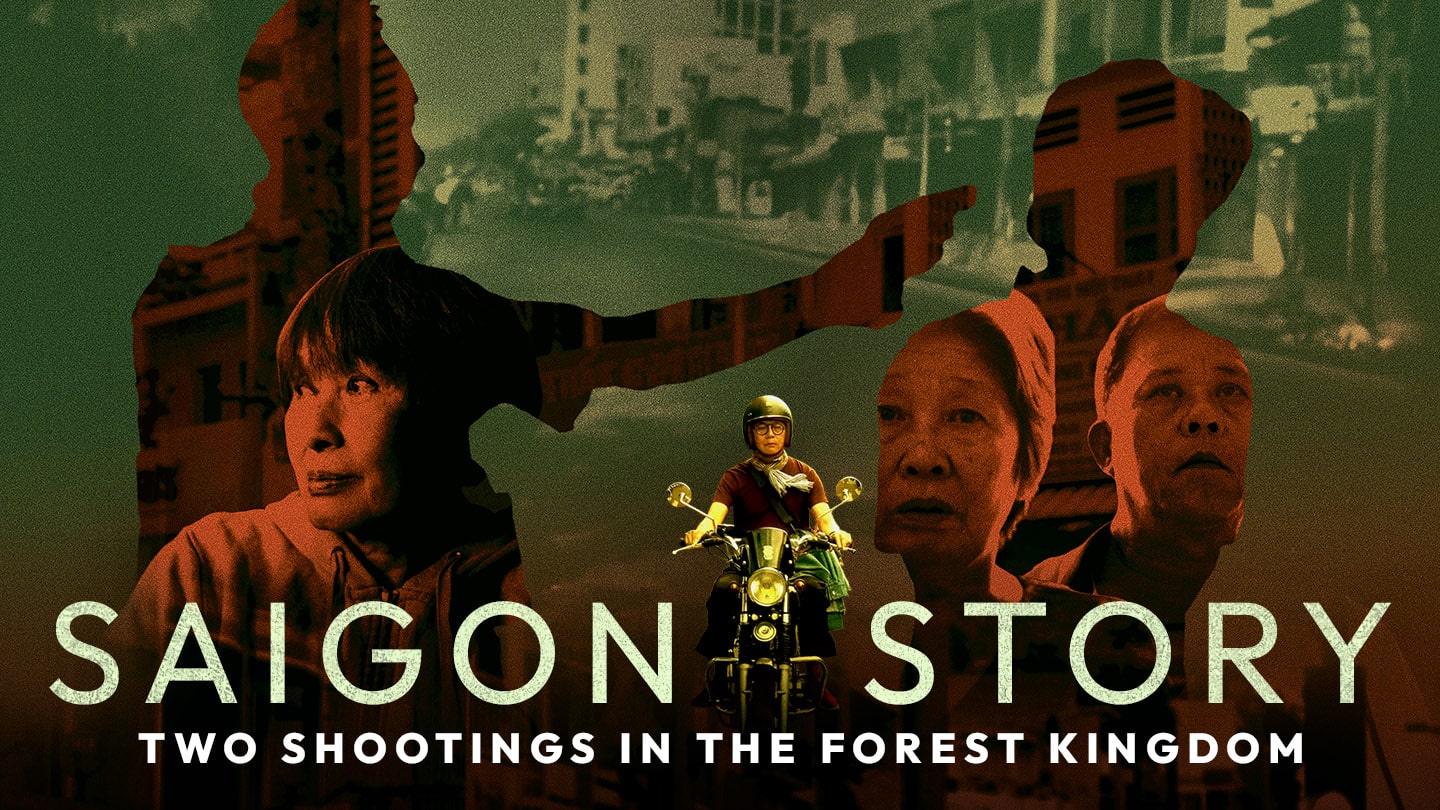
Saigon Story: Two Shootings in the Forest Kingdom is a 91-minute Canadian documentary film directed by Academy Award-nominated filmmaker Kim Nguyen, known for his 2012 film War Witch.
It was featured in the Canadian Spectrum competition and premiered at the TIFF Lightbox Cinemas on April 29 and April 30, 2026. While the majority of the film is in English, viewers should be prepared to read subtitles in Vietnamese and French.
It has been 51 years since the fall of Saigon on April 30, 1975. The iconic photograph taken by U.S. photojournalist Eddie Adams, titled “Saigon Execution,” shows a South Vietnamese police chief shooting a Viet Cong captain in broad daylight on the street. When this image was published, redistributed, and eventually named World Press Photo of the Year in 1968, no one anticipated how the events that followed would profoundly impact generations to come.
Many documentaries and stories, both fictional and non-fictional, about the Saigon War and the Saigon War are complex and thought-provoking. Understanding the intentions of both North and South Vietnam, as well as the Viet Cong (National Liberation Front) and the U.S. forces, has always been challenging, as these motivations are not clearly expressed. However, in director Kim Nguyen’s new documentary Saigon Story: Two Shootings in the Forest Kingdom, the film brings more personal perspective to the soldiers’ families and from frames eight to twenty-one, but only the sixteenth frame is the most well-known photograph that impacts and voices the story of how cruel war can be.
Generations and families of the soldiers who have sacrificed, captured, and soldiers who have been on both sides of the war –– those who were in the photographs are followed and documented and look back into their past and how they remember their experiences of the Saigon War and how it impacted their lives as kids or as adults. How they found new lives outside of Vietnam, how they escaped Vietnam, what countries welcomed them, how soldiers lived their lives to hide identities but also as veterans, and how witnesses and sons and daughters of the generation live now and how they honour their parents, relatives, and leaders who sacrificed their lives for the peace and independence of Vietnam.
It was said that both deceased soldiers from both sides were lying on top of each other. It is a quote by one of the father’s witnesses of the “Saigon Execution,” it is a reminder that though many have different perspectives and different sides to protect, at the end of their lives they are brothers and sisters, siblings not by blood but by nation, died with the perspective they want the best for their nation, died in different sides yet piled up together when death. There are many beautiful quotes in the film. Many that can be used now that the world is becoming more aggressive and violent as wars and chaos fuel again and again every day.
The narration throughout the film is compelling and effectively engages the audience. It captivates listeners, creating the impression that the stories being told are authentic and resonate with contemporary relevance. The cinematography is executed with a high level of artistry, showcasing meticulously planned transitions. The incorporation of archival photographs, historical videos, and sound effects, along with techniques such as fading in and fading out, skillfully illustrates the contrast between past and present, evoking a profound sense of wonder in the audience. Furthermore, the sound design is expertly balanced; it maintains an appropriate volume while still successfully eliciting emotional responses to the narratives presented by the families.
Without disclosing too much, the film presents the war through two parallel perspectives: the family of Nguyễn Văn Lém, captured in the iconic Saigon Execution photograph, and the families of Captain Nguyễn Ngọc Loan, alongside Vinh, an anonymous veteran whose identity remains concealed.
The documentary is filled with moments that are both visually striking and emotionally resonant, maintaining a careful balance between these two sides of the story. One of the most significant scenes portrayed the siblings as they reached a moment of profound healing. After enduring 56 years of emotional turmoil, one of the siblings expressed relief by stating they no longer needed to cry each morning, indicating a long-awaited sense of peace. This poignant moment was followed by a relevant quote from Võ Trung Dung, a freelance journalist, photojournalist, and documentary filmmaker known for his insightful work. He referenced a powerful photograph taken by Eddie Adams, which had a lasting impact on his perspective. Dung remarked, “Peace is not perfect… peace is our choice.” This statement emphasizes the notion that peace is not an absolute state but rather a conscious decision that individuals can make. The concept of peace is multifaceted and can be interpreted in various ways, reflecting the diverse beliefs and experiences of individuals. This complexity is exemplified in the differing views on peace held by two prominent leaders during the Saigon War, Ho Chi Minh and Ngo Dinh Diem, both of whom had distinct visions and strategies for their country’s future. Their contrasting approaches to leadership and nation-building during this turbulent period highlight the varied interpretations of peace and conflict resolution.
The Saigon Story: Two Shootings in the Forest Kingdom will have its broadcast premiere on TVO on May 31, 2026, at 9:00 PM. It will eventually be available on NFB.ca, the TVO YouTube channel, and at the DOXA Documentary Film Festival.
Author: