
Toronto Fringe 2026, an indie theatre festival, was held between June 30 and July 12 at venues across Toronto. I attended eight shows, out of the 123 performed at this edition. They ranged from dance performances to musical theatre to stand up comedy. Here are notes on a few of them
ABOVE THE HOSPITAL
“We are all just hamsters…eaten alive by f*cking gears”—says a guy to a fellow creative.
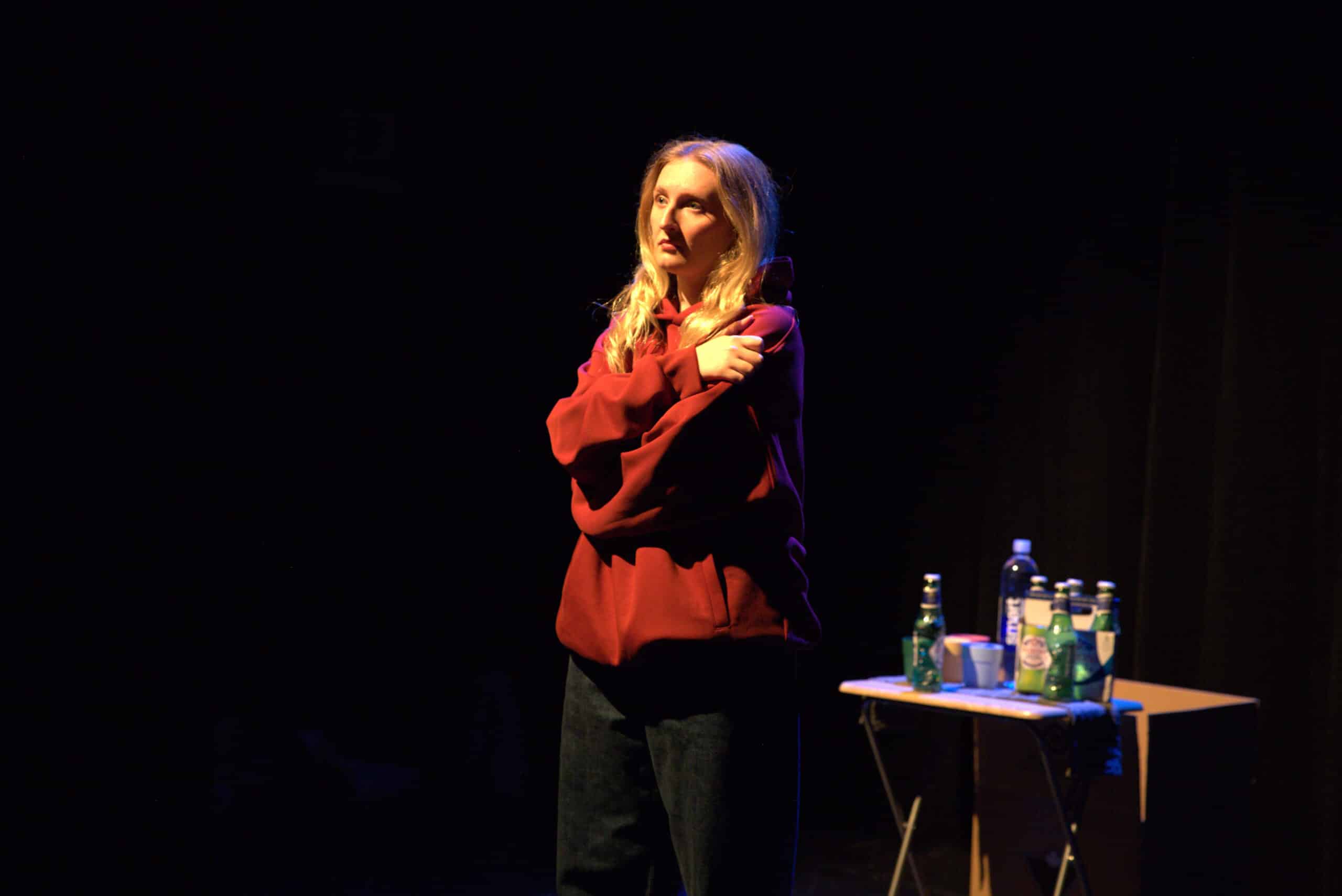
Midtwenties Theatre’s Above The Hospital follows a couple in their mid-20s, Lauren (Cydney Watson) and Cam (Hassan Babar), an aspiring director and musician respectively, over the course of a one-night gathering with friends in their small apartment in Vancouver. The friends – Mikey, Bo, and Abby – much like the protagonists, are struggling creatives.
The play explores life under capitalism in a big city and how it impacts relationships and life choices. Though it is set in Vancouver, it very well could have been Toronto. We watch Lauren and Cam’s relationship fall apart under the stress of bills and thwarted creative ambitions. “We are literally broke and there are more important things than your dumb music”, Lauren says to Cam at one point. A broken toilet in the apartment becomes an apt metaphor for their relationship that is no longer working and is buckling under unresolved tensions
The play works as a meditation on modern urban life where unaffordable housing, rising bills, and the tug-of-war between dreams and reality are constant companions. It also touches on the leads’ relationship to their respective parents. Lauren carries a deep guilt about her mother’s death, which is described as “medically assisted”. I would have loved to see a deeper exploration of that theme, but it is just mentioned in passing.
Some of the sub-plots don’t work as well. Mikey comes across as a typical quirky-friend character whose travails don’t add all that much to the central story. Abby, in a babydoll dress, channels the manic pixie dream girl archetype.
The set design is sparse, with a sofa as the centerpiece. It works for the most part. Using cardboard boxes as a stand-in for furniture was a confusing choice as it initially made me think that they have perhaps just moved into the house or are packing up to leave.
The play left me with the feeling that we are all just living the same lives—constantly struggling to hold on to our truth, hopes, and dreams while the darkness tries to swallow us whole.
Watch it to experience a nice slice-of-life existential crisis.
SEASON OF SOULS
How do we spend our time, and do we ever truly have enough? – This is the question Keir Collective’s show, Season of Souls, purports to ask. Does it succeed?
The show describes itself as an original contemporary dance production rooted in contemporary ballet.
The performance opens with a group of female dancers in net tops layered over bralettes and loose black pants, dancing energetically to Rosalia’s “Berghain”, with background animation and light effects. On their feet, only socks, no ballet shoes. It was a moving start that made me tear up. After that, it alternates between solos and group pieces in varied combinations of the 8 dancers. The dancing was beautiful to look at, displaying human agility and strength. The movements were fluid and fast.
The music also alternates between fast and thumping, and slow and mournful. There is slow piano and upbeat club music. After starting with “Berghain,” for the most part the music isn’t accompanied by vocals. My eyes glazed over during parts of the performance. I wondered if it was due to the lack of vocals or from overstimulation from the light effects, visual imagery, and the dancing.
The meaning is open for interpretation by every viewer. I didn’t see much connection between the lofty questions the performance wanted to posit and what I saw on stage. It was abstract to quite a high degree. No attempt is made to situate the audience in the themes.
Overall, I left the theatre with a feeling that I saw a good dance performance, but nothing more.
ALIYA KANANI: A COMEDIAN’S GUIDE TO ENLIGHTENMENT

In her solo show, Aliya Kanani, barefoot in a casual jumpsuit, takes the audience on a roller coaster ride through health issues, ghee enemas, and cross-country trips. There is also a mini-meditation session in between!
She started the show by situating the audience in her present—Aa Muslim, Indian woman with a “super deportable face”, who has recently moved to California. The show then moved to her touring life as an artist, the health conditions that made her take an ayurveda retreat in India, and then to the titular segment of her show, “Aliya’s guide to enlightenment”.
The topics that she wants to deal with are ginormous, so she starts small — a mention of a McDonalds boycott. It immediately grabbed my attention, though I thought it could just be a passing remark. But segment by segment she built on it, in such a way that when she finally dropped the g-word (genocide, alluding to Palestine), the audience was already disarmed, and there was not one sound of opposition from a theatre full of people. I felt the energy of the room transform as the show went on.
Even when the laughs thinned out, the storytelling didn’t falter. She used callbacks and crowd work to buttress her points, showcasing a confident performer with a firm grasp on her craft.
It’s the kind of show you feel grateful to have stumbled upon. It was greater than the sum of its parts. I felt warm and seen by the show unlike any other show I have watched at Fringe this year. Here was an artist talking about what is happening in the world, exploring how witnessing a genocide had “saddened her like a poison”, gently imploring others to care, and sharing the things that helped her deal with the grief. All while keeping the laughs going and even perhaps hoodwinking the audience with this laughter to talk about the bigger issues.
If reflecting the times is a sacred duty of an artist, then Aliya fulfilled it with aplomb. Do not miss it!